
How You Can Take Action
We promote initiatives, research, advocacy, and learning opportunities that aim to improve the lives of people impacted by dementia in Calgary and area.
You can take action by sharing, participating in, or volunteering for any of the projects listed here. Do you have an initiative or project that should be included here? Let us know by emailing today.

Investigating Midlife Physical Activity and Cognition Observational Study
Daily physical activity is medicine for the mind. We are tracking real-world activity and cognition in adults 45-55 to build practical and sex-informed activity goals that help protect brain health before problems start, during midlife.
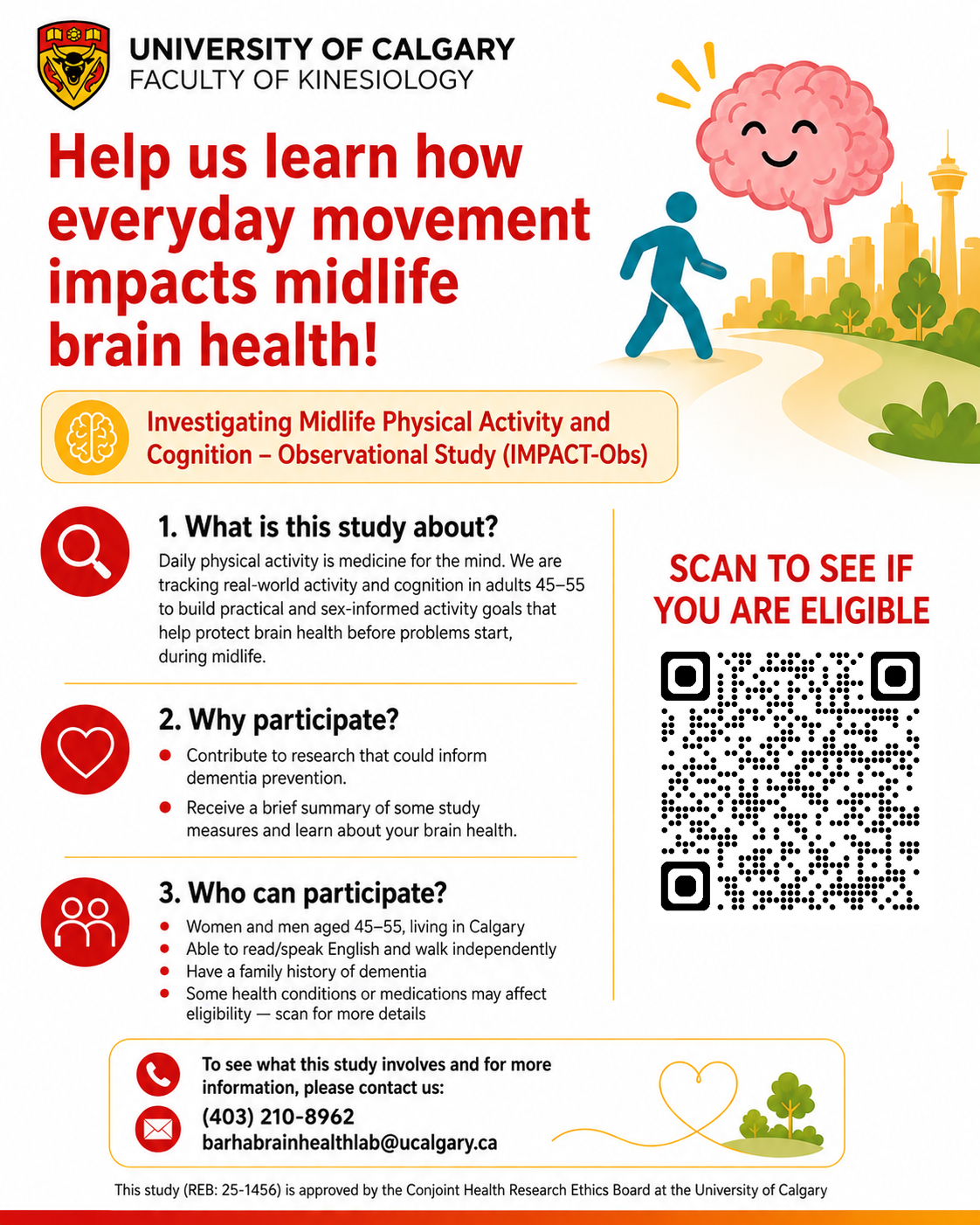
Investigating Midlife Physical Activity and Cognition Observational Study
Daily physical activity is medicine for the mind. We are tracking real-world activity and cognition in adults 45-55 to build practical and sex-informed activity goals that help protect brain health before problems start, during midlife.
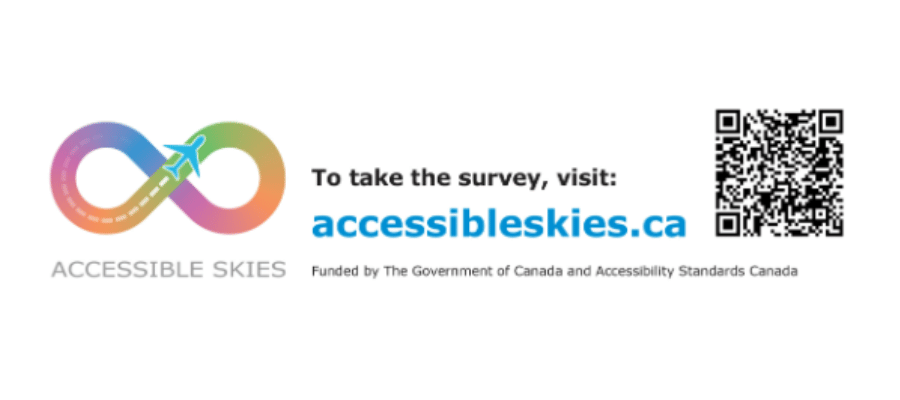
Accessible Skies Survey
Help make airports more accessible. This survey is in support of the Accessible Skies research project - a national project to improve airport experiences for people with cognitive disabilities and their support networks. This project is funded by the Government of Canada and Accessibility Standards Canada. Airports can be overwhelming, and people with cognitive disabilities and their support networks may face barriers to an equitable and enjoyable airport experience. Through Accessible Skies, we’re examining these barriers, investigating how accessibility standards in Canadian airports can be enhanced, and exploring how airport staff education and customer service can be improved. We're also trying to learn what experiences people may have had that made their travel easier. And that’s where you come in! Your responses to this survey will help us identify common barriers and inform recommendations to improve the Canadian airport experience. The information collected through this survey will also be used to inform future phases of the Accessible Skies project. We want to learn from you if you are: A person with a cognitive disability who currently travels by air. A person with a cognitive disability who has reduced or stopped flying because of cognitive, sensory, or mental health barriers. A care partner or family member to a person with a cognitive disability who currently travels by air or has reduced or stopped flying because of cognitive, sensory, or mental health barriers. This survey will be available until December 31, 2026. The length of the survey will depend on your answers. We estimate that it will take around 10 to 20 minutes to complete. Taking this survey is voluntary, and your answers will be anonymous. The survey will not collect or track your IP address. You don’t have to share any personal information, and you can skip any question or stop at any time before submitting your responses. Once you submit the survey, your responses can't be withdrawn because the survey is anonymous and individual responses cannot be identified or removed. The survey results will be collected and reviewed by Left Turn Right Turn, a Canadian accessibility consulting firm. We aim to collect responses from approximately 1,000 participants. All survey data will be securely stored on the SimpleSurvey platform and Left Turn Right Turn servers.

YouQuest Focusing on Young Onset Dementia
Recreation program for people living with young-onset dementia in Calgary.
YouQuest Focusing on Young Onset Dementia
Recreation program for people living with young-onset dementia in Calgary.
).png)
YouQuest Focusing on Young Onset Dementia
Recreation program for people living with young-onset dementia in Calgary.
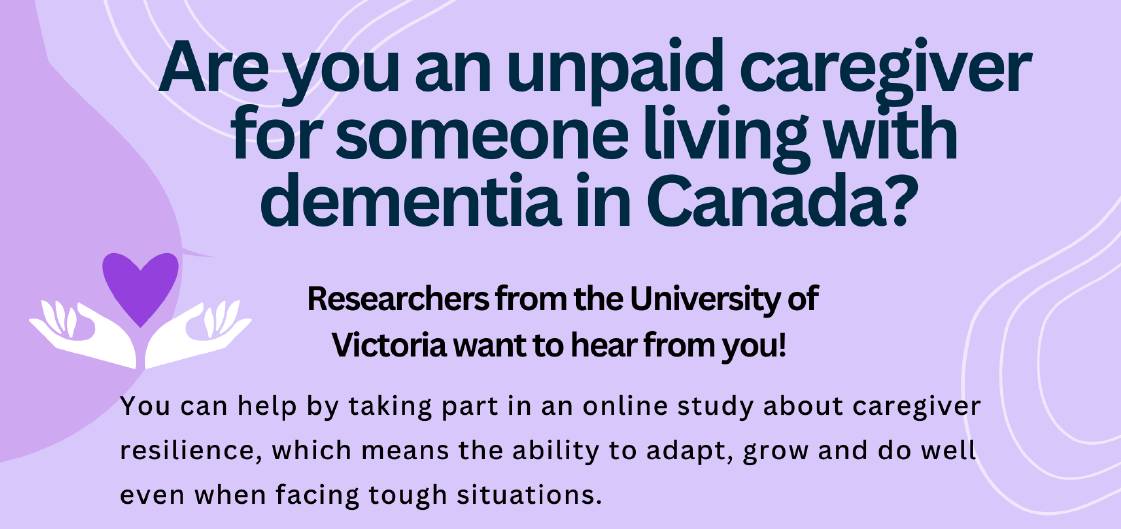
Study: Exploring Resiliency in Informal Caregivers of People Living with Dementia
Online study about resilience in caregivers of people living with dementia in Canada.
Study: Exploring Resiliency in Informal Caregivers of People Living with Dementia
Online study about resilience in caregivers of people living with dementia in Canada.
Study: Exploring Resiliency in Informal Caregivers of People Living with Dementia
Online study about resilience in caregivers of people living with dementia in Canada.

Volunteer Support Group Facilitator
The Volunteer Support Group Facilitator plays a vital role in guiding group sessions over a period of six weeks, fostering a safe and inclusive environment, and ensuring that participants feel supported and engaged.
Volunteer Support Group Facilitator
The Volunteer Support Group Facilitator plays a vital role in guiding group sessions over a period of six weeks, fostering a safe and inclusive environment, and ensuring that participants feel supported and engaged.
Volunteer Support Group Facilitator
The Volunteer Support Group Facilitator plays a vital role in guiding group sessions over a period of six weeks, fostering a safe and inclusive environment, and ensuring that participants feel supported and engaged.

MEMORI Study - Memory and Cognition Imaging in Dementia Research
Early cognitive decline is difficult to detect with current methods, which often miss subtle brain changes. This study investigates novel methods for assessing age-related brain changes and cognitive health using safe, wearable, and non-invasive brain imaging technologies.

Share Your Experience - Shape Informational Resources for Older Adults in Calgary
This study - open from March 4 to April 1, 2026 - is designed to learn how older adults in Calgary look for information about local programs and services that support healthy aging, the challenges they face, and what could make this process easier. Who can participate? - Adults aged 55 or older - Live in Calgary - Able to complete an online survey in English

Call for Participants: Brain Health in Long-Term and Assisted Living
A study of how the brain ages to uncover ways to protect memory and thinking.
Call for Participants: Brain Health in Long-Term and Assisted Living
A study of how the brain ages to uncover ways to protect memory and thinking.
Call for Participants: Brain Health in Long-Term and Assisted Living
A study of how the brain ages to uncover ways to protect memory and thinking.

Call for Participants: Dementia Management in Canada (Assistive technology products and services bundles)
Can bundles of assistive technology (AT) products and services assist dementia management in Canada? The study aims to better understand people's experiences, identify gaps, and improve AT availability and access for dementia management across Canada.

Call for Participants: Advancing Cerebrospinal Fluid Testing for Early Alzheimer's
Praxus Health is conducting a comprehensive feasibility and demand assessment for CSF testing services. The project will engage clinicians, patients, organizations and caregivers across both rural and urban settings to generate actionable insights that inform the equitable expansion of CSF-based diagnostics.
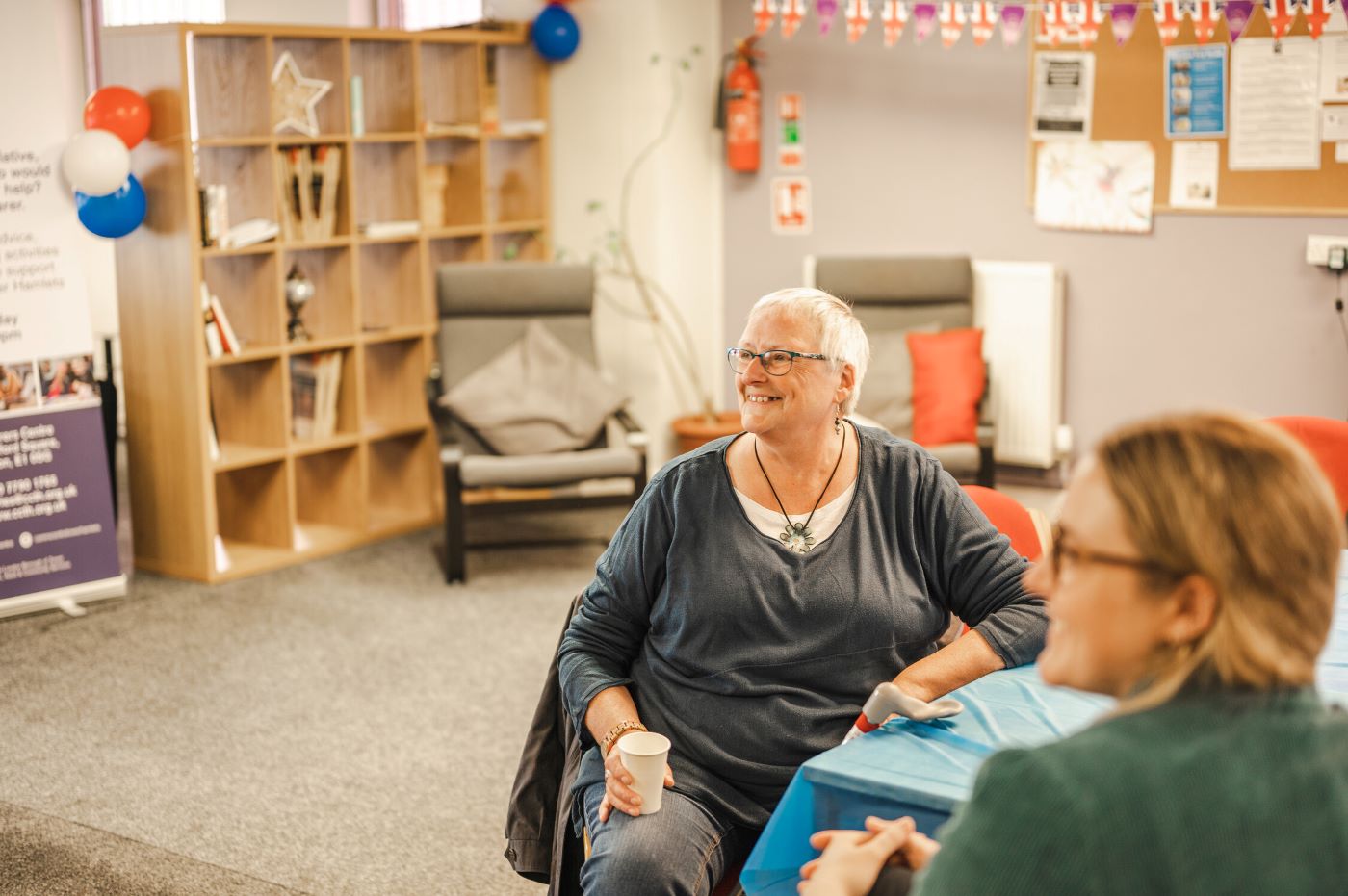
Train to be a Support Group Facilitator
Become a volunteer peer-support group facilitator with Caregivers Alberta.
Train to be a Support Group Facilitator
Become a volunteer peer-support group facilitator with Caregivers Alberta.
Train to be a Support Group Facilitator
Become a volunteer peer-support group facilitator with Caregivers Alberta.
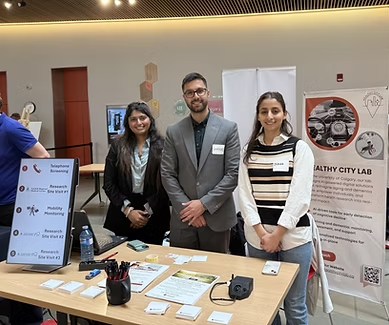
Call for Participants: Driving with Dementia
Led by Dr. Sayeh Bayat at the University of Calgary, this study will gather real-world driving data from people with dementia. Participation has no implications for a person’s driving license.
Call for Participants: Driving with Dementia
Led by Dr. Sayeh Bayat at the University of Calgary, this study will gather real-world driving data from people with dementia. Participation has no implications for a person’s driving license.
Call for Participants: Driving with Dementia
Led by Dr. Sayeh Bayat at the University of Calgary, this study will gather real-world driving data from people with dementia. Participation has no implications for a person’s driving license.
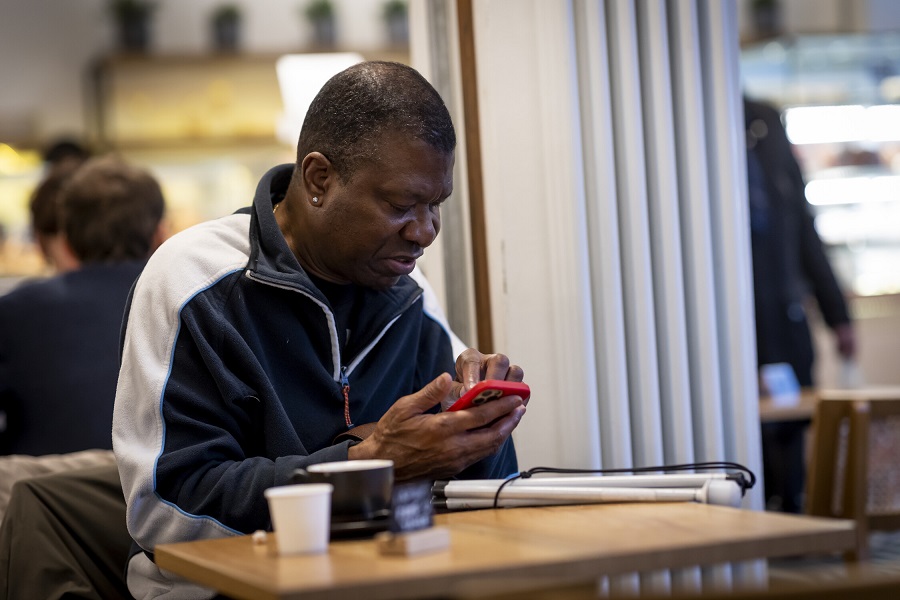
Research Study: Mobile App Support Tool
Provide user feedback on GuardIO, a mobile app that allows caregivers to monitor their person's mobility patterns and receive safety alerts.
Research Study: Mobile App Support Tool
Provide user feedback on GuardIO, a mobile app that allows caregivers to monitor their person's mobility patterns and receive safety alerts.
Research Study: Mobile App Support Tool
Provide user feedback on GuardIO, a mobile app that allows caregivers to monitor their person's mobility patterns and receive safety alerts.

Call for Participants: Assessing Impact of Adult Day Programs
Day program providers, people with dementia, and their caregivers can participate in this study.
Call for Participants: Assessing Impact of Adult Day Programs
Day program providers, people with dementia, and their caregivers can participate in this study.
Call for Participants: Assessing Impact of Adult Day Programs
Day program providers, people with dementia, and their caregivers can participate in this study.